What Does It Mean When Your Check Engine Light Comes On in St. Matthews, Kentucky?
Contact Us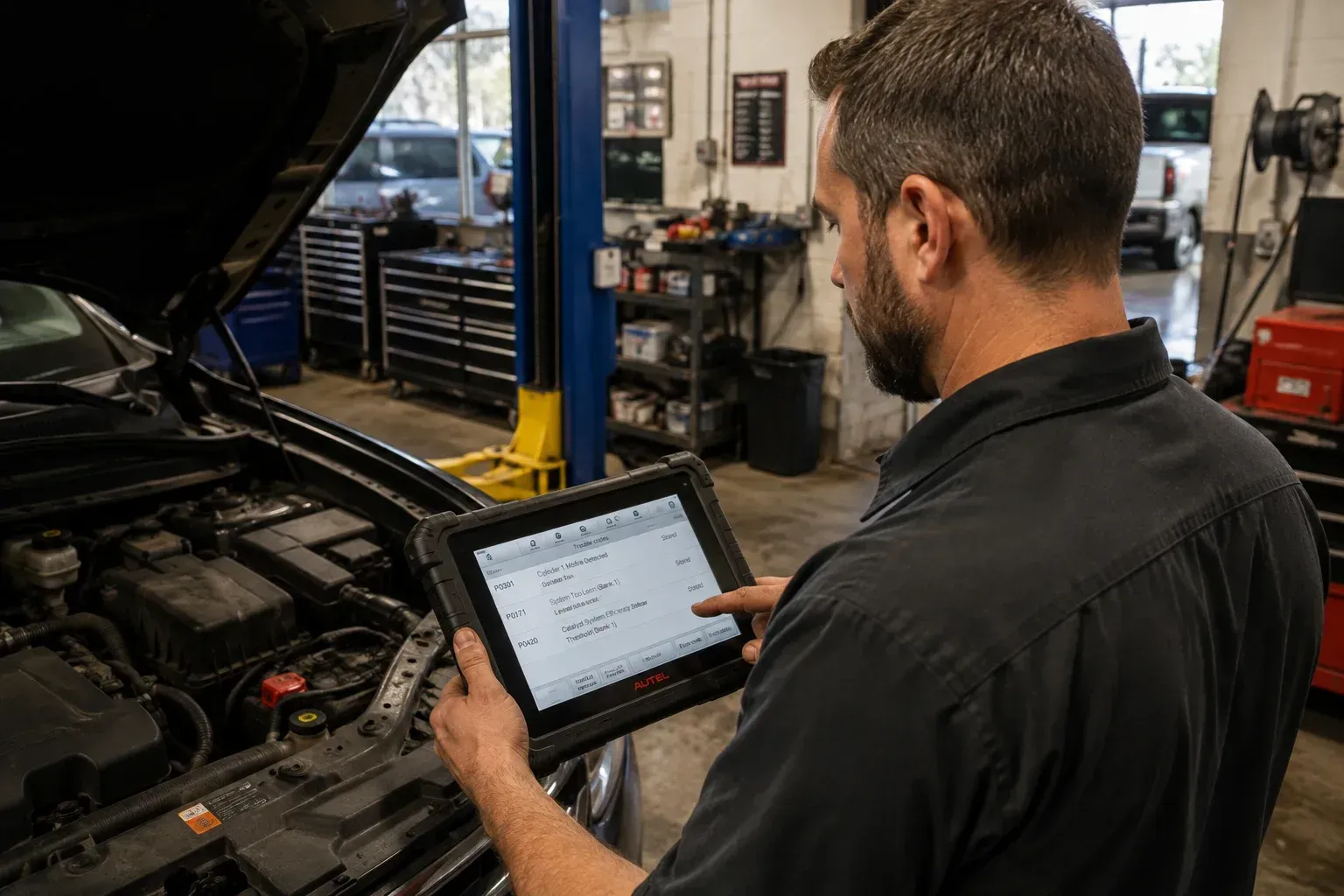
Table of Contents
- Introduction
- What Your Check Engine Light Actually Means
- Common Reasons Your Check Engine Light Appears
- Solid Light vs. Flashing Light — What's the Difference?
- Why You Can't Ignore the Light
- How Diagnostic Testing Works
- What Happens When You Get a Diagnosis
- Conclusion
- Get Answers About Your Check Engine Light
- Frequently Asked Questions
Key Takeaways
- Your check engine light indicates your vehicle's onboard diagnostics system has detected a problem with the engine, emissions system, or transmission
- The light can mean anything from a loose gas cap to a serious engine malfunction, so you can't know the real issue without diagnostic testing
- A solid light means get it checked soon, while a flashing light means stop driving immediately to avoid engine damage
- Professional diagnostic scanning reveals the specific problem code and helps you understand what needs to be fixed
- Ignoring a check engine light can lead to expensive repairs and reduced fuel efficiency
Introduction
Your check engine light comes on when your vehicle's onboard diagnostics system detects a problem with your engine, emissions system, or transmission, but it doesn't tell you what the problem actually is. This is why so many drivers find the light confusing — it could mean your gas cap is loose or your catalytic converter is failing, and you have no way to know which without getting it checked.
When that amber light comes on your dashboard, it's your vehicle's way of communicating that something needs attention. For drivers in St. Matthews and the surrounding Louisville area, understanding what this light means and why it matters helps you make smart decisions about your vehicle's care. Ignoring it can lead to real problems, but knowing what to expect takes the stress out of dealing with it.
What Your Check Engine Light Actually Means
Your car's check engine light is connected to something called the onboard diagnostic system, or OBD system. This system constantly monitors your engine and emission control systems while you're driving. When it detects something that doesn't match what's supposed to happen, it triggers the warning light.
The light itself doesn't give you specific information. It's a general alert saying your car found an issue. That issue gets stored as a code in your vehicle's computer. A technician can read that code with a diagnostic scanner, which tells them what system is having a problem and narrows down what might need fixing.
The check engine light covers a lot of ground because it monitors many different parts and systems. It's watching your oxygen sensors, catalytic converter, fuel system, ignition system, and emissions system. When any of those systems aren't working right, the light comes on.
Common Reasons Your Check Engine Light Appears
There's a wide range of reasons why your check engine light might come on, from minor issues you can fix yourself to more serious problems that need professional repair.
Minor Issues You Might Fix Yourself
Sometimes the light comes on for simple reasons. A loose or damaged gas cap is one of the most common causes. If your fuel system isn't sealed properly, the light triggers. You just unscrew the cap, make sure it's tight, and often the light goes away after you drive a bit more.
Worn spark plugs or a loose battery terminal can also trigger the light. If you know how to check these things safely, you might solve the problem yourself. But if you're not comfortable working on your car, a technician can check them for you.
Sensor Issues
Oxygen sensors monitor fuel and air mixture in your engine. When they fail, your car runs less efficiently and the light comes on. Mass airflow sensors do something similar — they measure how much air is entering the engine. When these sensors wear out or get dirty, the light activates.
These aren't dangerous emergencies, but they do affect fuel economy and engine performance. They need to be replaced eventually, but you can usually drive your car safely while arranging to get them fixed.
Catalytic Converter Problems
Your catalytic converter reduces emissions by converting harmful gases into less harmful ones. If it's failing or clogged, the check engine light comes on. This is one of the more expensive repairs on an engine, so some drivers delay fixing it. However, a failing catalytic converter can affect your car's performance and fuel economy. If you need
engine repair for this issue, addressing it prevents bigger problems down the road.
Transmission Issues
Problems with your transmission's solenoid or shift points can trigger the check engine light. Transmission issues range from minor to major, which is exactly why you need diagnostics to figure out what's actually happening.
Fuel System Problems
Issues with your fuel injectors, fuel pressure regulator, or fuel filter can trigger the light. These problems usually show up as rough idling, reduced fuel economy, or difficulty starting.
Solid Light vs. Flashing Light — What's the Difference?
Not all check engine lights are the same. The difference between a solid light and a flashing light matters.
Solid Check Engine Light
A solid light means your vehicle detected a problem, but it's not an emergency. You should get it checked within a few days, but you can usually keep driving. A solid light typically means a minor to moderate issue that needs attention but isn't threatening engine damage right now.
You should schedule a diagnostic appointment at your convenience, but you're not in crisis mode. Treat it like a scheduled maintenance appointment rather than an emergency.
Flashing Check Engine Light
A flashing light is different and more serious. It means your vehicle is misfiring or experiencing a problem that could damage your engine if you keep driving. When you see a flashing check engine light, you should stop driving as soon as safely possible and have your car towed or driven directly to a repair shop.
Continuing to drive with a flashing light can cause damage that turns a moderate repair into an expensive one. It's worth being cautious here.
Why You Can't Ignore the Check Engine Light
Some drivers ignore the light, especially if the car seems to be running fine. But that's not a good approach, and here's why.
Your vehicle's computer is detecting something you might not feel or hear yet. Just because your car drives okay doesn't mean the problem isn't getting worse. An oxygen sensor that's starting to fail might not be obvious to you, but it's affecting your fuel economy and emissions right now.
Ignoring the light often makes the eventual repair more expensive. A problem that costs a few hundred dollars to fix now can become a problem that costs over a thousand dollars if it damages other components first. Your vehicle is trying to warn you before something serious happens.
There's also the emissions test factor. If you're in a state that requires smog check testing and your check engine light is on, your vehicle will fail the test. You won't be able to register your car.
Beyond that, many modern vehicles have safety and emissions regulations. If your check engine light is on, you might be violating local emissions standards without realizing it.
How Diagnostic Testing Works
When you take your car to get checked, a technician connects a diagnostic scanner to your vehicle's OBD port — usually located under the dashboard on the driver's side. This scanner communicates with your vehicle's computer and reads the stored diagnostic codes.
The codes tell the technician what system triggered the light and what specific issue was detected. Different codes mean different things. The technician will also perform a visual inspection to look for anything obvious, like a loose sensor or damaged wire.
After reading the codes and doing the visual inspection, a good technician will explain what the codes mean, what they suspect the problem is, and what repair options you have. Some issues have obvious fixes, while others might need more investigation to pinpoint the exact cause.
What Happens When You Get a Diagnosis
Once a technician has engine diagnostics completed, they'll give you a report explaining what was found. They might identify one specific problem, or they might find multiple issues.
A good repair shop will explain which problems need immediate attention and which can wait. They'll give you pricing for repairs and let you decide how to proceed. Some people fix everything at once, while others prioritize the most important repairs and address others later.
If the problem is something simple like a loose gas cap, you might fix it yourself and the light could clear after driving for a bit. If it's a sensor issue, you'll likely need professional repair. For more serious problems like catalytic converter or transmission issues, you'll need to weigh the cost of repair against the importance of fixing it soon.
Conclusion
Your check engine light is a communication tool from your vehicle telling you something needs attention. The light itself doesn't tell you what's wrong, which is why so many drivers find it frustrating. Getting a professional engine diagnostics is the only way to know what's actually happening.
Whether the problem is minor or significant, addressing it gives you clear information to make decisions about your vehicle. You're not guessing anymore. You know what's wrong and can decide whether to fix it now or later based on what you actually find.
The worst approach is ignoring the light and hoping it goes away. It rarely does, and the longer you wait, the more likely a small problem becomes a bigger and more expensive one.
Get Answers About Your Check Engine Light
If your check engine light is on and you're not sure what to do next, getting a professional diagnosis gives you the information you need to move forward. A technician can read your diagnostic codes, explain what they mean, and help you understand your repair options. If you're in the St. Matthews area, auto services that include diagnostic testing can help you figure out exactly what your light means and what comes next.
Frequently Asked Questions
It depends. If the light is solid, you can usually drive safely to a repair shop, though you should schedule an appointment soon. If the light is flashing, stop driving immediately and have your car towed. A flashing light indicates a serious problem that could damage your engine.
Sometimes, if the problem was temporary or has been fixed. For example, if a loose gas cap triggered the light, tightening it might clear the light after you drive for a while. But most problems that trigger the light won't go away without repair or maintenance.
Many shops offer free or low-cost diagnostics, usually under $100. Some charge around $50 to $150 to read the codes and provide a report. The diagnostic fee is often worth it because it tells you exactly what you're dealing with instead of guessing.
Yes, absolutely. Your fuel system needs to be sealed properly. A loose, cracked, or missing gas cap triggers the light because your vehicle detects a leak in the fuel system. It's one of the easiest things to fix.
No. The light can mean anything from a minor sensor issue to a serious engine problem. You won't know unless you get it diagnosed. Most check engine light issues don't require engine replacement.
Not immediately, but you should get it checked. A solid light means you should schedule an appointment within a few days. A flashing light means you should stop driving and get professional help right away. Either way, it's not something to ignore, but it's not necessarily a crisis unless the light is flashing.
You can clear the light using an OBD scanner, but clearing the light doesn't fix the problem. The light will likely come back on once the problem is still there. It's better to get the problem diagnosed and fixed rather than just clearing the light.