Can Cloudy Headlights Actually Get You Pulled Over in Kentucky?
Contact Us
Table of Contents
- Introduction
- What Cloudy Headlights Actually Do to Your Light
- Whether Yours Crosses a Legal Line Is Not Our Call
- Why Headlight Lenses Go Cloudy in the First Place
- The Safety Case Is Stronger Than the Legal One
- Why Restoration Usually Beats Replacement
- When Cloudy Headlights Are Not the Real Problem
- Conclusion
- Headlights Looking Tired Before Winter?
- Frequently Asked Questions
Key Takeaways
- A hazy lens scatters and absorbs light instead of projecting it where it belongs.
- Vehicle equipment requirements exist. Where the line sits is for the statute and the officer, not us.
- The decline is gradual, which is exactly why nobody notices it happening.
- The UV sealant after polishing is what decides how long the fix lasts.
- If restored lenses still look dim, the problem was never the plastic.
Introduction
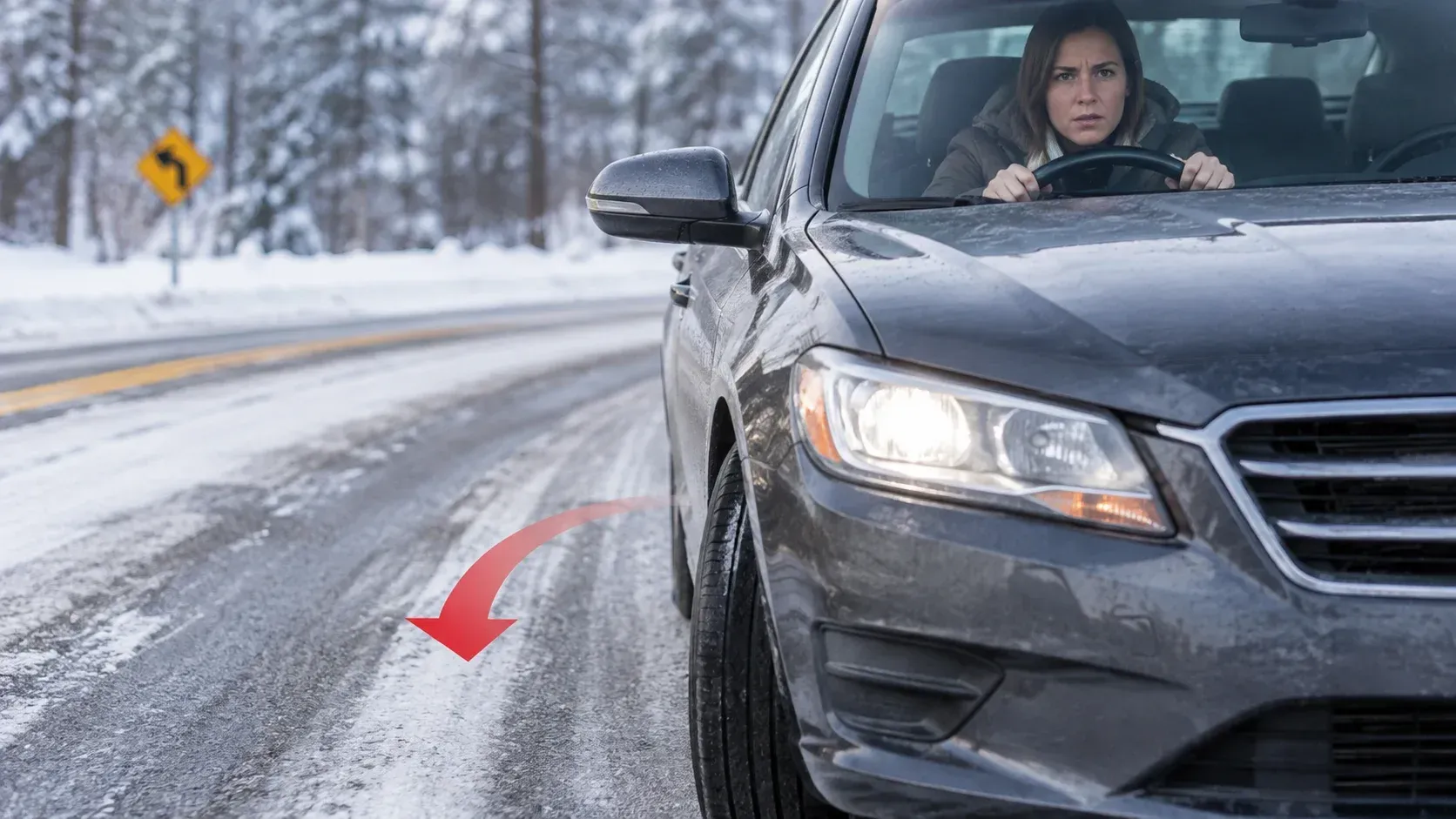
Possibly, since vehicle equipment requirements cover whether your lights do their job, and a lens hazed enough to scatter the beam is a reasonable thing for an officer to notice, which is one reason headlight restoration gets asked about more in winter than any other time of year.
Cloudy headlights come through the shop most weeks, and the honest answer splits in two. We are a repair shop, not lawyers, so the legal half is not ours to settle. What we can speak to with confidence is what oxidation does to the light itself, and that part is not a judgment call at all.
What Cloudy Headlights Actually Do to Your Light
A headlight is an optical system, and the lens is part of the optics rather than just a cover.
The bulb or LED produces light. The reflector and the lens shape that light into a specific pattern, aimed down and out with a cutoff so you are lighting the road rather than the trees and oncoming windshields. The whole assembly is designed to do that as a unit.
Oxidation attacks the outer surface of that unit. A clouded lens does two things at once:
- It scatters light. A microscopically rough surface throws light in every direction instead of letting it pass straight through. Some of that scatter comes back at you as glare.
- It absorbs light. Yellowed plastic blocks part of the spectrum outright, so less energy makes it out of the housing at all.
The result is less light on the road and a sloppier beam pattern. The bulb has not weakened. The optics in front of it have.
Whether Yours Crosses a Legal Line Is Not Our Call
Being straight about this, because it is the question in the title.
States set equipment requirements for vehicle lighting, and an officer can act on equipment that appears not to meet them. That much is general and true. What we are not going to do is quote you Kentucky statute language or tell you how hazy is too hazy. We fix cars. We are not attorneys, and a wrong answer from a repair shop on a legal question is worse than no answer.
If you want the actual written standard, it is in the Kentucky Revised Statutes covering vehicle equipment, and Kentucky State Police can point you at it. If you have already been cited and want to know what to do about it, that is a conversation for a lawyer.
What we can tell you is that in practice this is rarely the reason anybody restores their headlights. The reason is the next section.
Why Headlight Lenses Go Cloudy in the First Place
It is a coating failure, not dirt, which is why cleaning them never works.
Modern headlight lenses are polycarbonate, a tough plastic that happens to be vulnerable to ultraviolet light. Manufacturers deal with that by applying a UV-protective coating at the factory. That coating is doing all the work.
Over years it breaks down, and several things speed it up:
- Sun exposure. A car parked outside facing south ages its lenses faster than one in a garage.
- Road grit and salt, which Louisville winters supply generously.
- Car wash brushes, which abrade the coating a little at a time.
- Chemicals. Bug remover, wheel cleaner and degreaser overspray all attack it.
Once the coating is compromised, the polycarbonate underneath starts oxidizing, and that is the yellow haze you are looking at. It is in the plastic, not on it. Soap will not touch it, and neither will the toothpaste trick, beyond a day or two.
The Safety Case Is Stronger Than the Legal One
This is the part worth your attention, because cloudy headlights cost you something every single night whether or not anyone ever pulls you over.
Headlight degradation is gradual. It happens across years, your eyes adapt to it as it goes, and there is no day where the lights suddenly look bad. People genuinely do not know their lights are poor until they drive the car the night after a restoration and notice how much further down the road they can see.
Where it matters most around here:
- Unlit roads outside the city, where your headlights are the only light there is
- Rain at night. Wet asphalt reflects light away rather than back at you, so you need more of it, not less
- Winter. Dark at five in the afternoon means far more of your driving happens on headlights
- Older eyes. Night vision declines with age, and poor headlights compound it
None of that depends on anybody writing you a ticket. Your routine maintenance thinking should treat lighting the same way it treats brakes and tires, because all three are about stopping in time for something you can see.
Why Restoration Usually Beats Replacement
For most cars it is the better value by a wide margin, and the reason is what gets put on at the end.
The process is mechanical. Technicians assess the lens, mask off the surrounding paint and trim so nothing else gets touched, wet sand through progressively finer grits to cut away the oxidized layer, machine polish the plastic back to clarity, and then apply a UV-protective sealant. On a pair that is about three quarters of an hour to an hour, and it can usually be done the same day.
The sealant is the step that matters most, and it is where cheap jobs fail. Sanding and polishing alone leaves you with bare, unprotected polycarbonate, which is more vulnerable than it was before anyone touched it. It will look spectacular for a month and then haze up faster than the original did. The protection going back on is the difference between a fix and a delay.
Replacement housings are the alternative, and on most vehicles they are a genuinely expensive part, more so on anything with projector or adaptive optics. Replacement makes sense when a housing is cracked, when moisture is getting inside, or when the reflector itself has degraded. For plain surface oxidation it is a lot of money to solve a problem that sanding solves.
When Cloudy Headlights Are Not the Real Problem
Worth checking before you spend anything, because restoration will not fix any of these.
- Bulbs at the end of their life. Halogen output drops well before the bulb actually fails, and both sides usually age together so you do not notice the comparison.
- A poor ground or corroded connector, which drops voltage at the bulb and dims it.
- Aim. A headlight pointed too low lights the pavement just ahead of the bumper and nothing useful beyond it.
- Moisture inside the housing, which fogs from the inside where no amount of outside polishing reaches.
If your lenses are clear and the light is still poor, that is an electrical or mechanical fault rather than a cosmetic one, and chasing it down is electrical faults work. We would rather tell you that than sell you a restoration that changes nothing.
Conclusion
Go out tonight, park facing a garage door or a wall, and look at the pattern your headlights throw. If the edges are soft and the whole thing looks washed out rather than crisp, your lenses are doing that, not your bulbs. Whether cloudy headlights ever become a legal problem for you is a question for somebody else. Whether you can see a deer at the edge of your beam on a dark road in January is a question you can answer yourself in about ten seconds.
Headlights Looking Tired Before Winter?
Bring the car by and we will restore the lenses properly, with the UV sealant that makes the work last rather than just making it look good on the way out. A pair usually takes under an hour and can often be done the same day. We are at 5503 Greenwood Rd in Louisville, open Monday to Friday, 7:00AM to 5:30PM, working on domestic and imported cars, trucks and SUVs across Louisville, Pleasure Ridge Park, Shively, Highview, Newburg, Lyndon, Dixie and St. Matthews. If it turns out the lenses are not your problem, we will say so. Call (502) 937-3593 or
book a slot. We also keep an eye on this for customers
around Louisville during routine visits.
Frequently Asked Questions
Can you get a ticket for cloudy headlights?
Vehicle equipment requirements cover whether lights perform properly, and an officer can act on lights that appear not to. Where exactly the line sits is a matter for the statute and for the officer, not for a repair shop. Check the Kentucky Revised Statutes or ask Kentucky State Police.
Do cloudy headlights actually reduce visibility?
Yes. An oxidized lens scatters and absorbs light rather than projecting it, so less reaches the road and the beam pattern loses its shape. The bulb is unaffected. The optics in front of it are doing the damage.
Does toothpaste fix cloudy headlights?
Briefly. It is a mild abrasive, so it cuts a little oxidation and leaves bare plastic with no UV protection behind it. The haze returns quickly, often worse, because the factory coating is gone and nothing replaced it.
How long does headlight restoration last?
It depends almost entirely on whether a UV sealant was applied afterward and how the car is parked and washed. Polishing without resealing fails fast. Polishing with proper protection lasts considerably longer.
Should I just replace the headlight housings?
Only if the housing is cracked, taking on moisture, or the reflector inside has degraded. For surface oxidation alone, replacement is an expensive solution to a problem that sanding and sealing handles.